Legal Twin
An AI-powered workspace that helps lawyers focus on what matters.
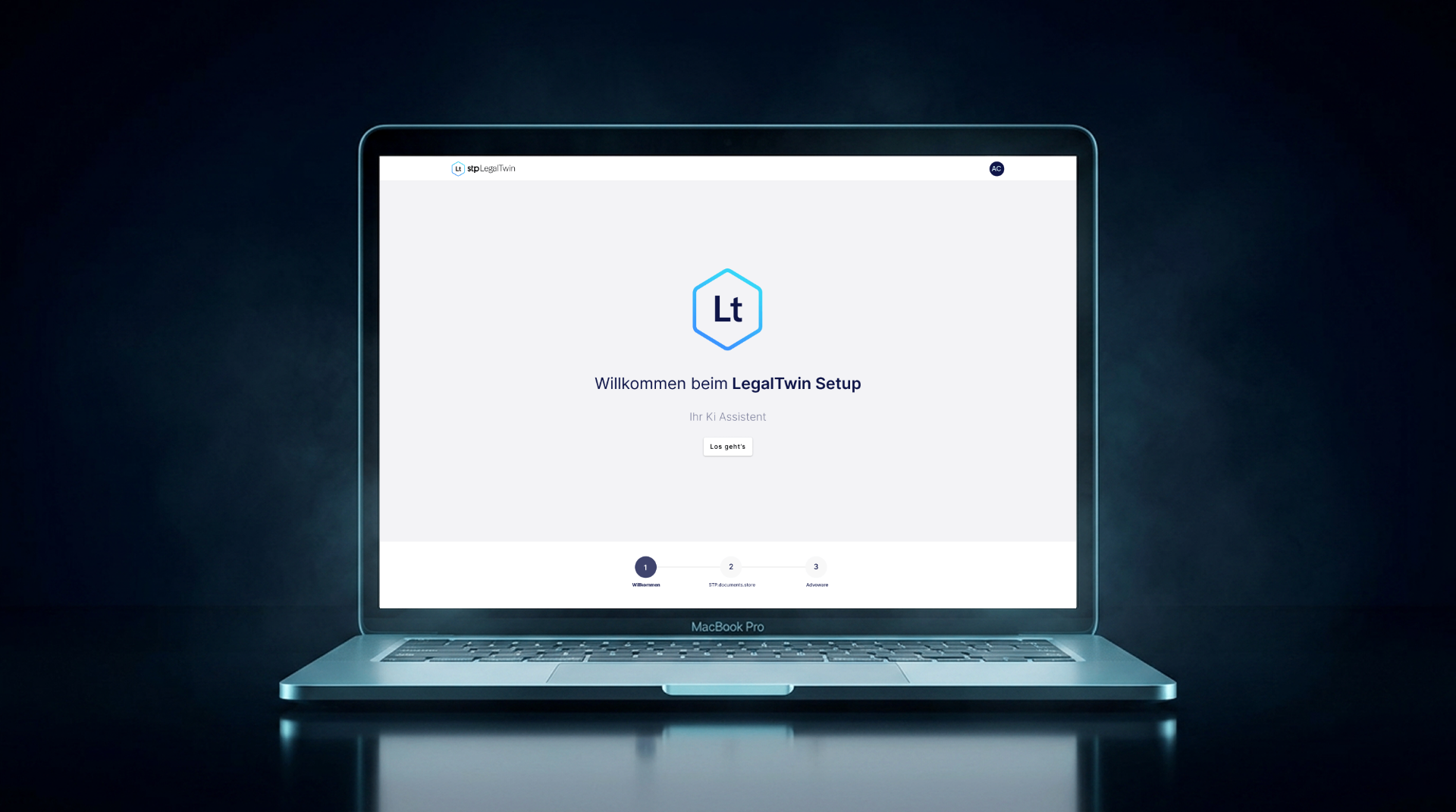
Legal Twin is a web-based application designed to support lawyers in managing their daily workload with greater clarity and efficiency. By leveraging AI, the platform automatically summarizes legal matters, highlights key dates and deadlines, and organizes critical information such as involved parties, related documents, and case status — all in one intuitive interface.
The problem
Lawyers often juggle multiple cases, each with complex timelines, documents, and stakeholders. Traditional case management tools are either too rigid or too manual, leading to missed deadlines, fragmented information, and cognitive overload. Legal Twin simplifies this by using AI to surface what matters most — without the noise.
Key challenges
Trustworthy AI Summaries
Designing AI-generated summaries that were both accurate and digestible required careful content hierarchy and trust-building UI elements.
Visualizing Critical Dates
Surfacing hearings, filings, and renewals across cases without overwhelming users or burying context.
Organizing Case Data
Structuring parties, documents, and timelines so they're searchable, filterable, and instantly scannable.
Supporting Diverse Practices
Creating a flexible interface that adapts to varied matter types, from litigation to corporate law.
Design process
- 01
Discovery & Research
Interviewed lawyers across practice areas, mapped the lifecycle of a legal matter, audited existing legal-tech tools, and collaborated with AI engineers to understand model capabilities and limitations.
- 02
Define & Ideate
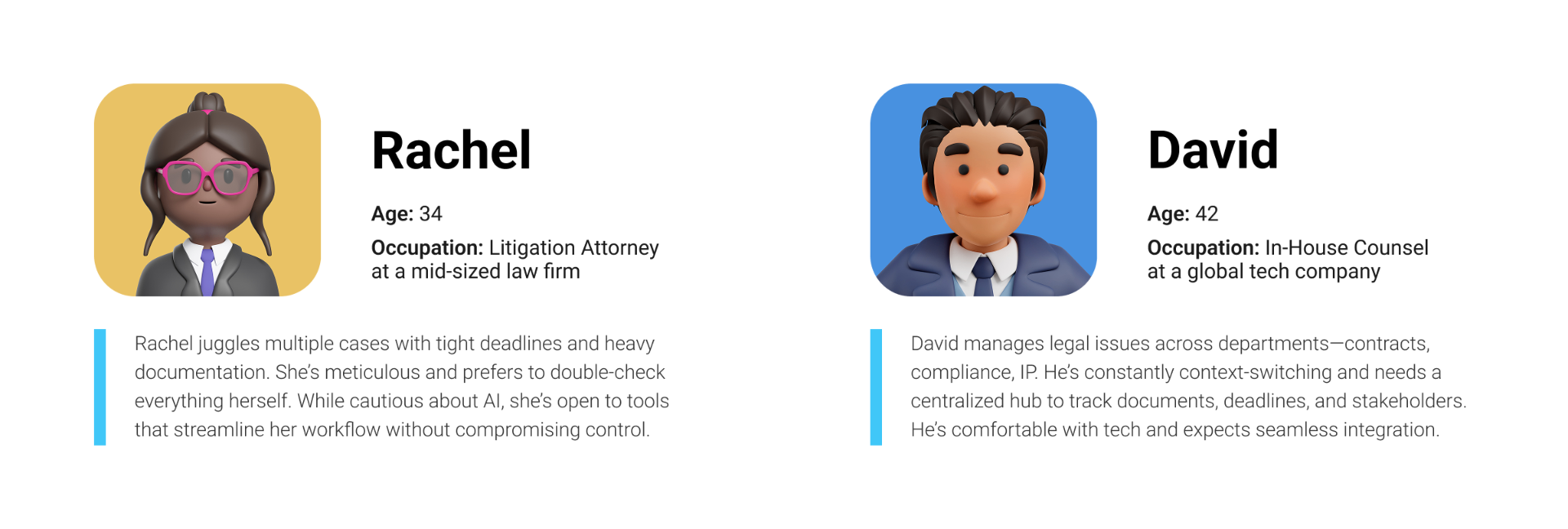
Built personas like 'The Litigator' and 'The In-House Counsel'. Mapped user journeys from initial access via another legal software through to in-app workflows. Ideated AI summaries, smart date tracking, and contextual document previews.
- 03
Design
Translated ideas into sketches, then low- and mid-fidelity wireframes, then high-fidelity Figma prototypes focused on clarity, trust, and legal precision.
- 04
Test & Iterate
Ran usability testing with legal professionals. Removed visual distractions, made secondary content collapsible, and enhanced the timeline component with meaningful data points so users could quickly grasp upcoming events and case progression.
- 05
Deliver & Collaborate
Provided detailed design specs, joined dailies and sprint reviews, and advocated for continuous feedback loops to improve AI performance post-launch.
Who Legal Twin is for
Two primary personas anchored the design — a litigation attorney managing courtroom workloads, and an in-house counsel coordinating legal operations across a global tech company. Their workflows, comfort with technology, and definitions of 'control' shaped every decision.
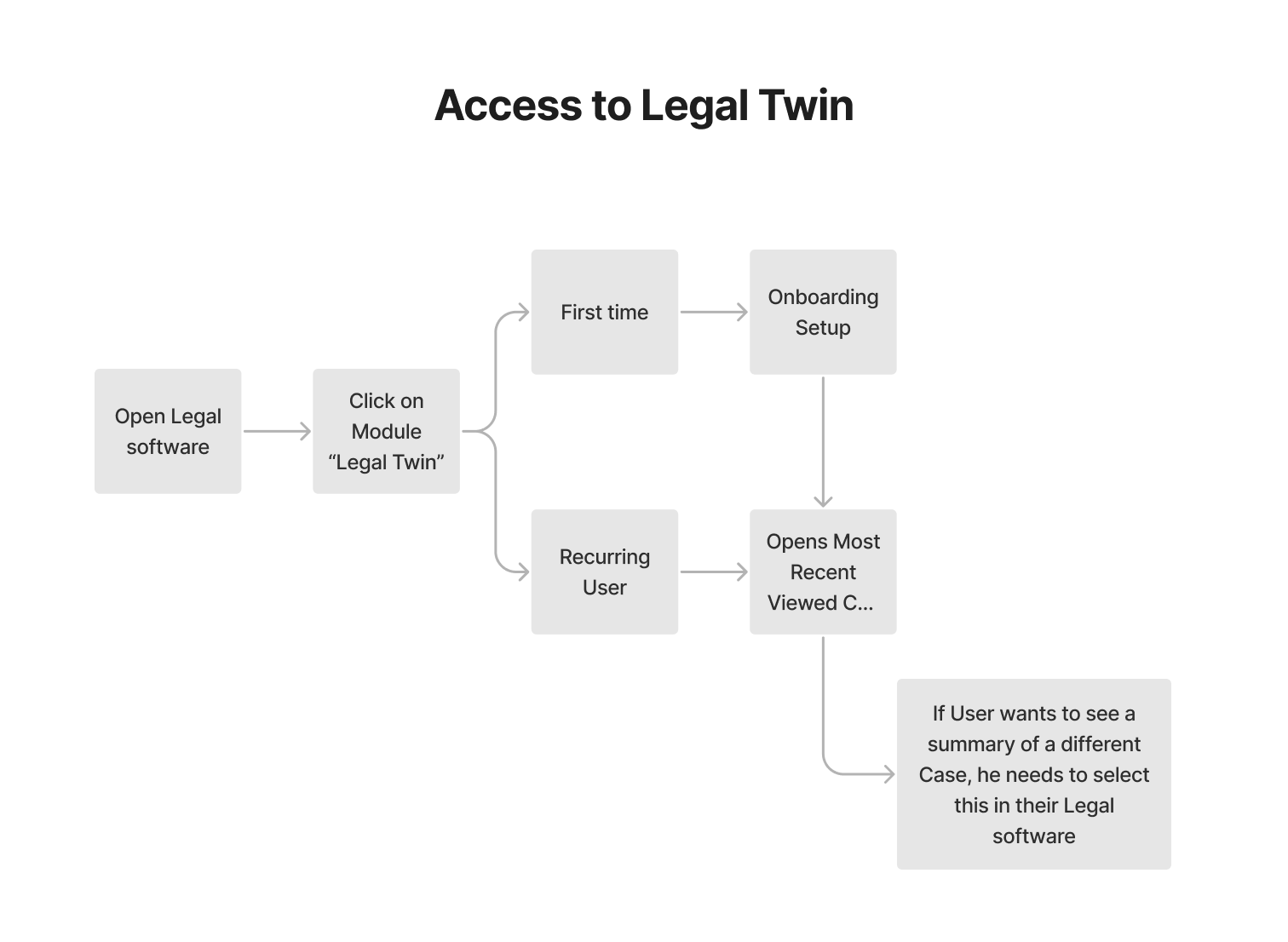
Access to Legal Twin
Legal Twin lives inside the lawyer's existing legal software as a module. First-time users go through a short onboarding setup, while recurring users land directly on their most recently viewed case — keeping the entry point fast and contextual.
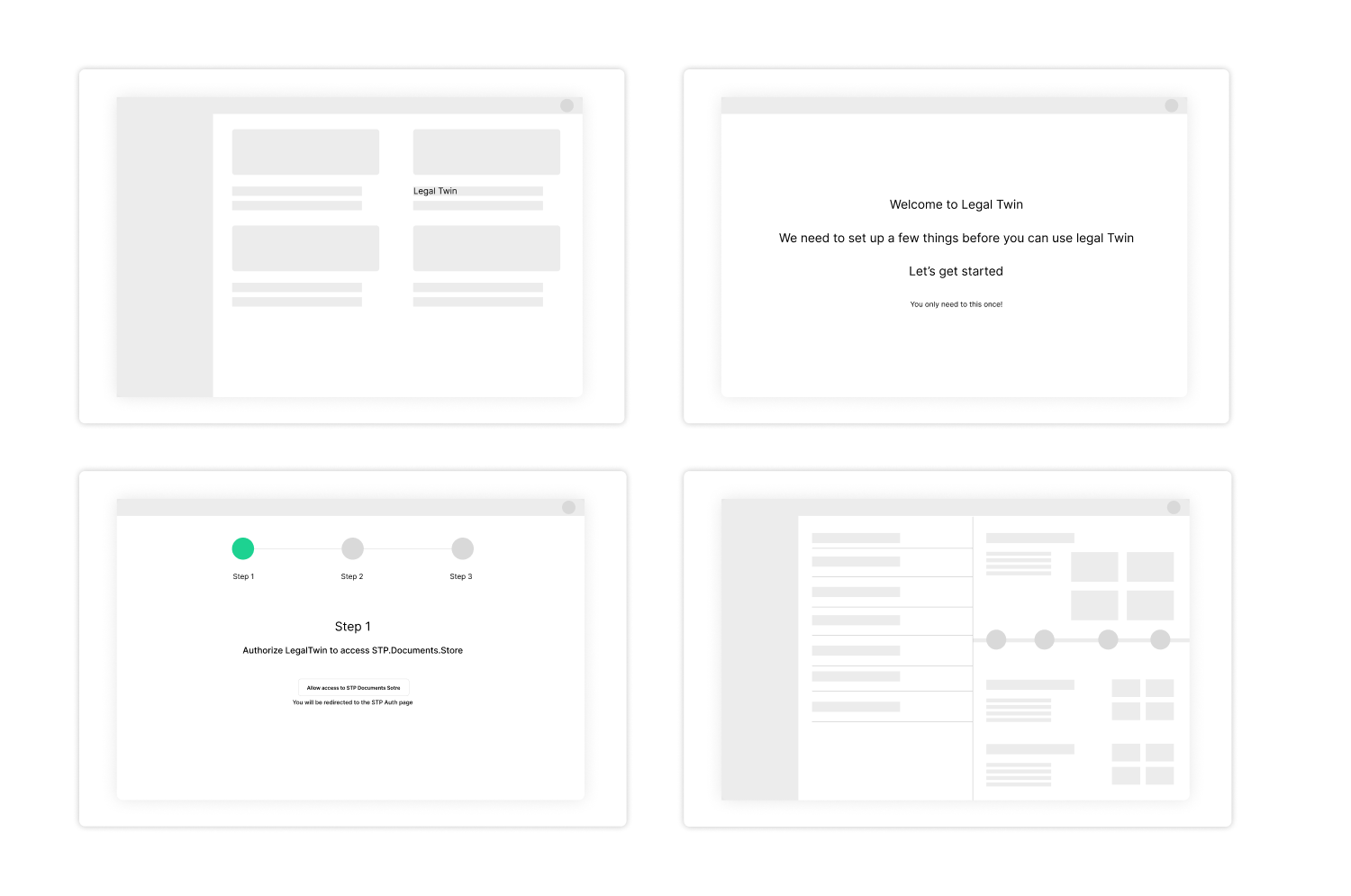
Mapping the structure
Early wireframes explored how Legal Twin would live inside the host legal software, the first-time welcome moment, the one-time authorization flow to connect document storage, and the core case view with a timeline of key dates. The focus at this stage was layout, hierarchy, and flow — not visual polish.
Iterating from user feedback
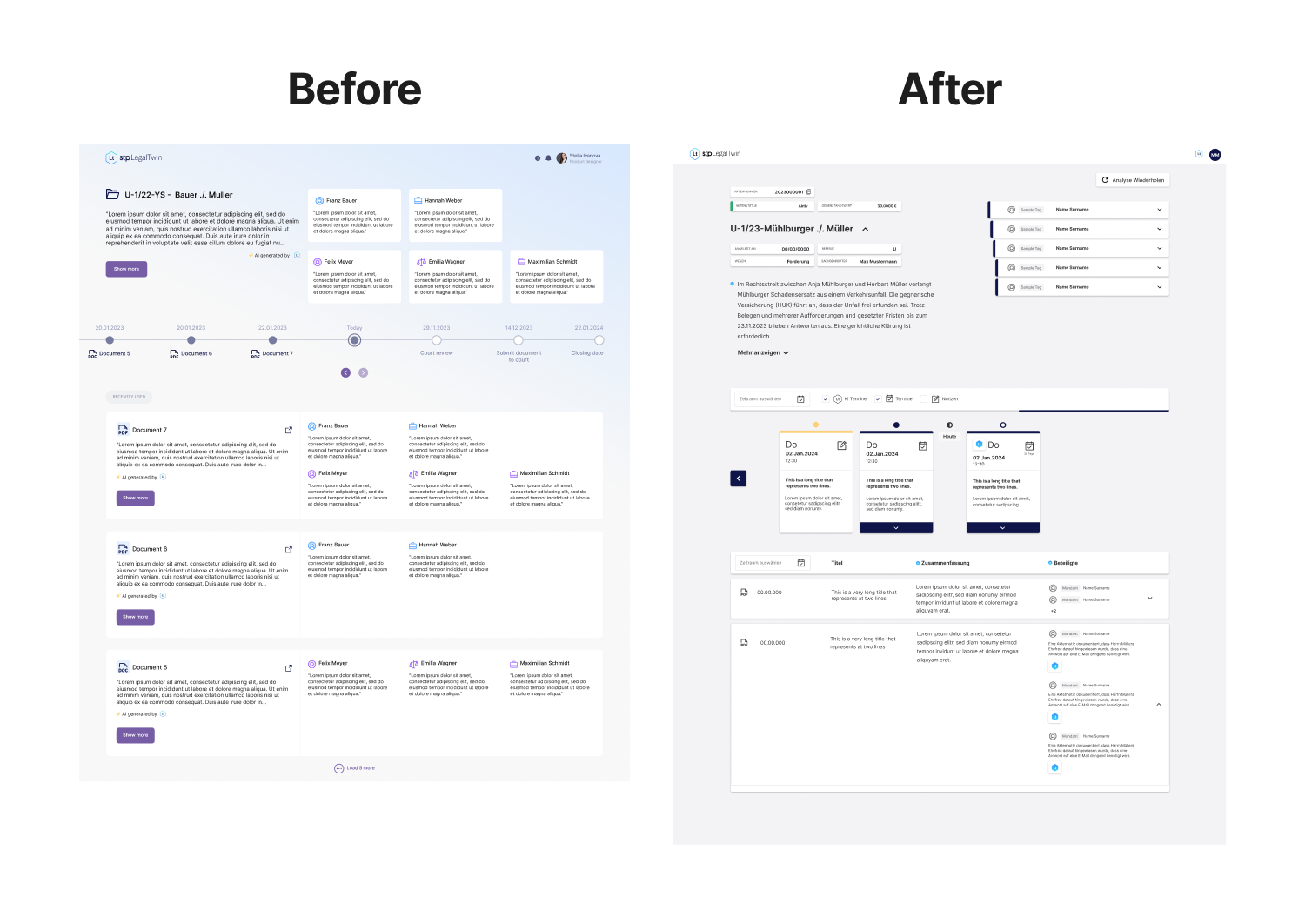
After usability testing and interviews with lawyers, the case view was rebuilt around clarity and trust. The dense, card-heavy layout was replaced with a structured matter header, a focused AI summary, a cleaner key-dates timeline, and a scannable table of parties and documents — surfacing what matters first and pushing secondary content into progressive disclosure.
What shipped
Transformed Legal Twin into a cleaner, more focused workspace that supports legal professionals in staying organized and efficient, with AI surfacing context rather than adding noise.
- →AI features earn trust through UI affordances — confidence indicators, sourcing, and reversibility matter as much as accuracy.
- →Lawyers want fewer clicks, not more features. Every interaction had to justify itself.